WhatsApp enquiries reach a phone, not a database. Someone has to read the message, decide it matters, and copy the details into the CRM by hand. That step is optional in practice, so it is skipped when people are busy — which is exactly when the most enquiries arrive.
Open your CRM and count this month's leads. Now open the WhatsApp your ads point at and scroll. The two numbers do not match, and they never have.
This is not a discipline problem and it is not fixed by asking the team to be more careful. It is structural: WhatsApp delivers to a phone and a CRM expects a record, and the only thing joining them is a person with time.
Where they actually go
1. The ones that arrive when nobody is working
A lead messages at 10:40 pm. It is read at 9:15 am. In those hours they have messaged three of your competitors, and one of them answered. By the time anyone considers typing this person into the CRM, they are not a lead any more — so nobody does.
2. The ones that got a reply but not a record
Someone did answer, on their own phone, between two other jobs. The conversation happened. The customer was quoted a price and promised a callback. None of it exists anywhere except on that handset, and if the person answering leaves, changes phone, or simply forgets, so does the deal.
3. The ones that were never worth typing in
Half of what arrives on a lead-gen number is not a buyer. Wrong area, wrong budget, wrong product, or a supplier. Nobody types those in — reasonably. But it means the CRM has no idea how many enquiries you generated, only how many survived somebody's snap judgement. Your cost per lead is therefore wrong, and so is every decision you make from it.
4. The ones waiting on something internal
A quote is pending. A site visit needs confirming. The salesperson is waiting on a price from you. The lead sits in a state that has no field in the CRM, so it lives in someone's head until it expires.
Why a CRM integration alone does not fix it
The obvious answer is to connect WhatsApp to the CRM, and it is a genuine improvement: conversations stop living on personal phones and start attaching to records. Problems two and four get materially better.
But problems one and three do not move, because a connector does not answer anybody. The 10:40 pm lead now waits until morning inside your CRM instead of inside a phone. The record exists; the sale still does not. If you want the detail of what a connector does and does not cover, we walked through Zoho's integration step by step.
What actually closes the gap
Something has to answer the moment the message lands, decide whether it is worth a salesperson's time, and write down what happened — without waiting for a human to be free. Then all four failures become the same solved problem:
| Where leads go missing | What has to happen instead |
|---|---|
| Arrived overnight | Answered in seconds, at any hour |
| Answered but never recorded | Every message saved with timestamps, automatically |
| Judged not worth typing in | Every enquiry captured, then qualified — so the count is real |
| Waiting on something internal | A status and a date, not somebody's memory |
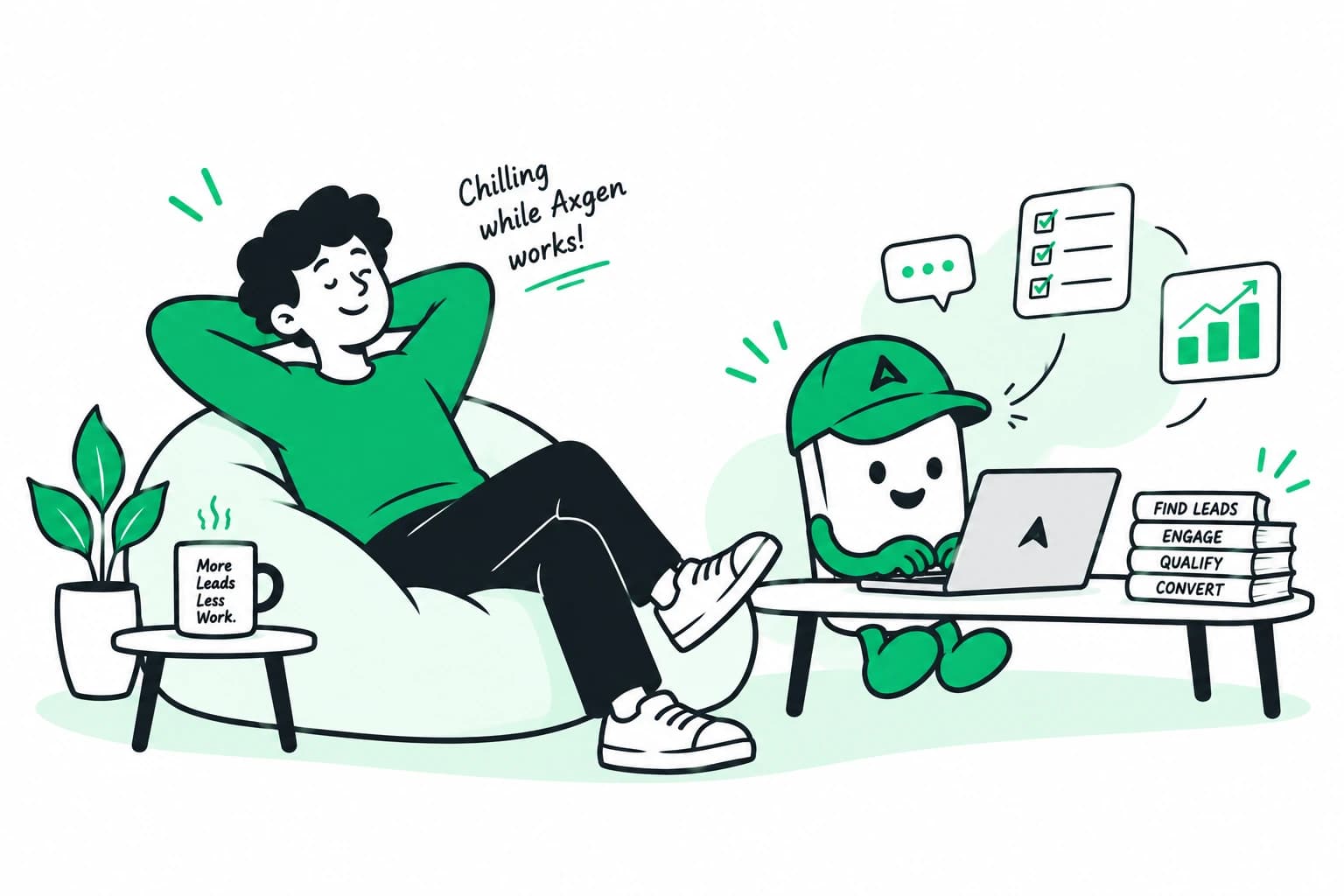
That is the job Axgen does, and the reason it writes to your CRM rather than replacing it: the CRM was never the problem. The empty rows in it were.